
Pakistan's Interior Minister Mohsin Naqvi visited Tehran for the third time recently to mediate peace amidst rising tensions between the US and Iran. Pakistan is actively leading diplomatic efforts to de-escalate the conflict in West Asia, which has impacted global energy markets and trade.

Iran's Foreign Ministry spokesperson Esmaeil Baghaei has accused the United States of frequently changing its positions and complicating efforts to reach an understanding, stating that these shifts disrupt diplomatic processes and prolong negotiations. He also linked any potential agreement with the US to an immediate ceasefire in Lebanon, accusing Israel of escalating conflict to derail diplomatic efforts.

Students and families must stress test repayment capacity based on Indian salary standards.

'With inflationary pressures now at elevated levels and the adverse cost environment persisting, the company has to pass on a portion of the increased costs to the market, while continuing to ensure that the impact on customers is kept to the minimum extent possible.'

The Enforcement Directorate conducted searches at premises linked to Punjab industries minister Sanjeev Arora as part of a FEMA probe into alleged foreign exchange violations, insider trading, and round-tripping of funds.

Indian benchmark indices Sensex and Nifty closed marginally lower due to profit-taking, following the Reserve Bank of India's decision to keep the repo rate unchanged while lowering its growth expectations for the current fiscal year and forecasting higher inflation.

The Narcotics Control Bureau (NCB) has secured the conviction of five individuals involved in a major synthetic drug trafficking case in Mumbai, and has seized assets worth over Rs 6.5 crore linked to the illegal trade.

'At the first sign of real trouble, that money will move. There will be a run.'

The country's foreign exchange reserves fell $6.687 billion to $564.05 billion in the week ended August 19, according to the Reserve Bank of India (RBI) data. In the previous week ended August 12, the reserves declined $2.24 billion to $570.74 billion. The drop in the reserves during the week ended August 19 was due to a fall in the Foreign Currency Assets (FCA) and the gold reserves, as per the Weekly Statistical Supplement released by RBI on Friday.

Indian benchmark equity indices Sensex and Nifty closed higher, recovering from previous losses, driven by a global market rebound, a pause in Israel-Iran hostilities, and a rally in bank stocks.
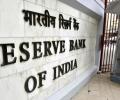
The Reserve Bank of India (RBI) has removed the prior approval requirement for non-bank entities to form tie-up arrangements for facilitating outward remittance services through banks in India, aiming to streamline the process and enhance efficiency.

The rupee recovered to 95.18 against the US dollar after hitting an all-time intra-day low of 95.44. The recovery was supported by possible RBI intervention amid renewed Gulf tensions and rising crude oil prices.

The central bank is yet to consider actions such as a rate hike or mobilising dollar inflows from non-resident Indians to boost forex reserves as it cannot afford to continue with them for long when the rupee's internationalisation tops its agenda, explains Tamal Bandyopadhyay.

India's foreign exchange reserves increased $2.54 billion to $597.93 billion for the week ended November 24, the Reserve Bank said on Friday. In the previous reporting week, the overall reserves had jumped $5.08 billion to $595.4 billion. For the week ended November 24, the foreign currency assets, a major component of the reserves, increased $2.14 billion to $528.53 billion, as per the data from the Reserve Bank of India (RBI).

The Indian rupee is highly vulnerable among Asian currencies, with Barclays and MUFG warning of a potential depreciation towards 100/$ if the West Asia conflict persists, driven by widening current account deficits and elevated crude oil prices.

The Enforcement Directorate (ED) reports a decline in traditional financial crimes due to sustained investigative actions and government initiatives, while highlighting emerging challenges like cryptocurrency fraud and terror financing.

The support will be provided to oil-marketing companies (OMCs) in the form of interest-free advances through the ministry of petroleum and natural gas. The OMCs, in turn, will use the fund to provide ATF price stabilisation support to Indian carriers operating domestic and international flights.

Indian equity benchmark indices Sensex and Nifty experienced a significant tumble in early trade, with the Sensex tanking nearly 700 points, driven by uncertainty surrounding US-Iran negotiations, a fresh spike in crude oil prices, and persistent foreign fund outflows.

The Confederation of Indian Industry (CII) has proposed a 20-point policy agenda to the finance ministry, including a conflict-linked emergency credit line guarantee scheme and tax rationalisation on energy inputs, to support MSMEs, exporters, and energy-intensive industries affected by the ongoing West Asia war.

Indian equity benchmark indices Sensex and Nifty declined in early trade, driven by persistent concerns over the unresolved US-Iran situation and continued outflows from foreign institutional investors.

Indian stock market benchmarks, Sensex and Nifty, saw gains in early trading, driven by anticipation surrounding the Reserve Bank of India's monetary policy decision, despite mixed global cues and significant FII outflows.

Gurugram Police arrested two alleged sharpshooters linked to the Himanshu Bhau gang after an encounter on the Delhi-Jaipur highway. The suspects, who sustained leg injuries during the exchange of fire, have multiple criminal cases against them, including murder and robbery.
Indian benchmark indices, Sensex and Nifty, closed lower, primarily due to a sharp sell-off in IT stocks, a fresh surge in crude oil prices, and sustained outflows from foreign institutional investors. The Sensex dropped over 300 points, while the Nifty declined by 77.95 points.
Indian benchmark indices Sensex and Nifty rebounded in early trade, driven by strong buying in blue-chip stocks and positive cues from Asian markets, following a significant selloff in the previous session.

The Indian rupee plummeted to a new all-time closing low of 95.81 against the US dollar, driven by surging crude oil prices, persistent inflation concerns, and a strengthening dollar index.
Indian benchmark indices Sensex and Nifty closed lower for the second consecutive day, driven by investor caution over conflicting geopolitical signals from West Asia and fresh foreign institutional investor (FII) outflows.

'Once the currency goes out of the hand, then possibly your major challenge is that it will not come back.'

Indian benchmark indices Sensex and Nifty experienced a significant slump in early trade, mirroring a sharp decline in global equities and a fresh spike in crude oil prices, exacerbated by simmering tensions in West Asia and a global unwinding of the AI-led rally. Track how sensex, Nifty fared on June 8.

A new report suggests that blending 20 per cent dimethyl ether (DME) with LPG could significantly reduce India's LPG imports, leading to substantial savings in foreign exchange.

Sharp differences between Iran and the UAE over the West Asia conflict were on full display during the BRICS foreign ministers' meeting in New Delhi, signalling the challenges the bloc faces in reaching a consensus position on the crisis.

Market participants do not expect any immediate impact on the rupee from the Reserve Bank of India's (RBI's) a "comprehensive" master direction aimed at strengthening the framework for hedging foreign exchange risks. RBI Governor Shaktikanta Das, in his monetary policy statement, revealed that the central bank is poised to issue a master direction to consolidate guidelines for all types of forex transactions. But this development, according to market players, is more of a directional guidance than a mandatory directive.

The Indian rupee depreciated 20 paise to close at a fresh all-time low of 94.88 against the US dollar, driven by surging Brent crude oil prices, hovering around USD 115 per barrel, and persistent foreign capital outflows.

'The situation globally is quite challenging, but we have the confidence and courage of conviction that we will come out winners even in this challenging time.'

The economic fallout of the West Asia crisis, the prevailing security situation in the Indo-Pacific and ways to boost cooperation in critical minerals and technology are expected to top the agenda at a crucial meeting of the Quad foreign ministers on Tuesday.
The Enforcement Directorate (ED) is shifting its focus to emerging financial crimes such as cryptocurrency fraud, terror financing, cyber-enabled crimes, and narcotics trafficking, according to Director Rahul Navin. The agency reported a high conviction rate and significant asset restitution to victims of financial fraud.

External Affairs Minister S Jaishankar and his Iranian counterpart Abbas Araghchi held talks focusing on the West Asia crisis and its impact on energy supplies and maritime stability.

The Indian rupee experienced a significant surge against the US dollar following the Reserve Bank of India's measures to restrict banks from onshore forward markets. Despite this, the rupee remains under pressure from foreign capital outflows, a strong dollar, and rising crude oil prices.
Pakistani security forces have killed at least 17 militants in Balochistan province following a deadly train attack last week, the army said.
Indian benchmark indices Sensex and Nifty traded lower amid volatile trends, influenced by escalating geopolitical uncertainties in West Asia and fresh outflows from Foreign Institutional Investors (FIIs).
Indian benchmark stock indices, Sensex and Nifty, recorded their fourth consecutive day of declines, driven by selling in FMCG, financial, and auto sectors. The downturn is attributed to fresh tensions in the Middle East, uncertainty surrounding the US-Iran 60-day ceasefire, and elevated crude oil prices.
 © 2026 Rediff.com - Advertise with us - Disclaimer - Privacy Policy - Sitemap - Feedback - About us - Terms of use - Grievances